Water Landscapes in the Netherlands
Water has shaped the Netherlands through canals, windmills, polders, wetlands, dikes and coastal engineering. Choose Amsterdam for an urban canal landscape, Kinderdijk for windmills and water management, Giethoorn for boating, Zeeland for flood protection and the Delta Works, or the Wadden Sea for tidal nature. Most first-time visitors need only one or two water landscapes. Choose those that fit naturally with the cities and regions already in your route.
Why Explore Dutch Water Landscapes?
Water is not only part of the Dutch scenery. It has influenced where people live, how cities developed, how goods were transported and how low-lying land was made usable.
Canals supported urban trade and movement. Windmills and pumping stations removed excess water. Dikes protected communities, while storm-surge barriers were constructed to reduce the risk of flooding from the sea.
Water has also created important natural environments. Wetlands, rivers, estuaries, dunes and tidal flats provide habitats for birds, fish, seals and other wildlife.
Exploring these landscapes can help you understand:
- why Dutch cities contain so many canals;
- how windmills helped keep land dry;
- what a polder is;
- how wetlands developed through both human activity and natural processes;
- why coastal defenses remain essential;
- how the Dutch continue to adapt to rivers and the sea;
- why water management is an ongoing process rather than a completed historical project.
Water landscapes range from compact city experiences to large regions requiring several days. The right choice depends on your route, interests and available time.
Which Water Landscape Suits Your Trip?
Choose Amsterdam Canals when you want historic architecture, urban walks and an easy water experience within a major city.
Choose Kinderdijk when you want windmills within the landscape they were built to manage.
Choose Zaanse Schans when industrial windmills, traditional crafts and easy access from Amsterdam matter more than water engineering alone.
Choose Giethoorn when boating, bridges and a rural water village are the main attraction.
Choose Weerribben-Wieden when wetlands, reedlands, wildlife and quieter boating interest you more than one famous village.
Choose Zeeland and the Delta Works when beaches, flood history and large-scale coastal engineering are central to your trip.
Choose the Wadden Sea when tidal nature, islands, birdlife and slow coastal travel are your priorities.
Choose the Beemster Polder or Flevoland when land reclamation and planned landscapes interest you.
Amsterdam Canals
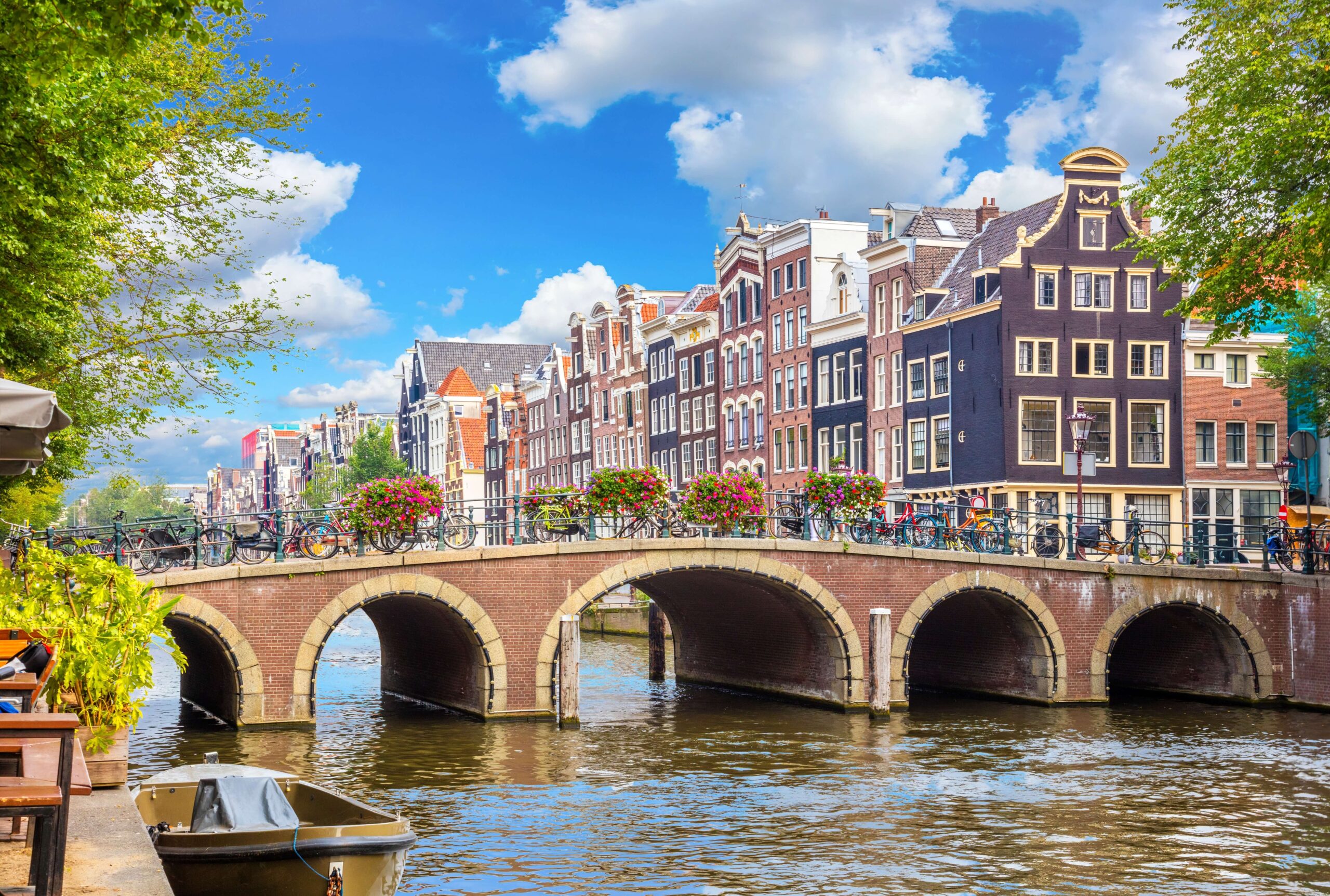
Amsterdam’s canal ring is the most accessible urban water landscape for international visitors.
The canals were planned as part of the city’s expansion and supported trade, transport, drainage and residential development. Merchant houses, warehouses, bridges and later houseboats now shape the visitor experience.
Walking provides the best opportunity to notice architecture, street patterns and differences between the major canals. A canal cruise adds a lower perspective and helps explain how the waterways connect.
Allow two to four hours for a first canal experience. Combine the western canal ring with the Jordaan, Brouwersgracht or the Nine Streets rather than trying to see every canal.
Amsterdam is the best choice when water should form part of a wider city visit rather than the entire purpose of the day.
Best for: canals, historic architecture and first-time visits
Explore the Amsterdam CanalsAmsterdam Canals: Walking, Cruises & Visitor Guide
Kinderdijk Windmills
Kinderdijk is one of the clearest places to understand traditional Dutch water management.
Its windmills were part of a larger system that moved water from low-lying polders into storage basins and eventually toward the river. Modern pumping stations now perform much of this work, but the historic system remains visible within the landscape.
Kinderdijk is not only a row of picturesque windmills. Dikes, waterways, storage basins, sluices and pumping stations are all part of the story.
The outdoor landscape can be explored on foot without a general entrance ticket. Admission is required for the museum mills, visitor facilities and official boat experiences.
Allow two to three hours for a first visit. Kinderdijk fits most naturally with Rotterdam or Dordrecht rather than Amsterdam.
Best for: windmills, polders, water engineering and photography
Explore Kinderdijk
Zaanse Schans
Zaanse Schans offers a different windmill experience from Kinderdijk.
The windmills in the Zaan region were mainly used for industrial activities such as sawing timber, pressing oil and producing pigments. The destination also includes wooden houses, workshops, museums and traditional crafts.
Choose Zaanse Schans when you want several Dutch heritage experiences within a compact area or need an easy half-day excursion from Amsterdam.
Choose Kinderdijk when drainage, polders and the wider story of living below water level are more important.
Most short itineraries do not need both. Visit both only when windmills, technology or industrial history are major interests.
Best for: industrial windmills, crafts and an easy Amsterdam excursion
Explore Zaanse Schans
Giethoorn
Giethoorn is known for canals, wooden bridges and thatched farmhouses.
The historic village developed in a wetland environment where water routes played an important role in transport. Today, boating is the most recognizable visitor experience.
A complete visit combines a walk with time on the water. Choose a small rental boat when you are comfortable steering, or a guided cruise when you prefer commentary and less responsibility.
Giethoorn can become extremely busy during warm weekends and the main summer season. Visit early, stay overnight or explore nearby water villages when a quieter experience matters.
Allow four to six hours at the destination. From Amsterdam, Giethoorn normally requires a full day because of the travel time.
Best for: boating, bridges and a rural water-village experience
Explore Giethoorn
Weerribben-Wieden National Park
Giethoorn is only one part of the wider Weerribben-Wieden landscape.
The national park contains lakes, canals, reedlands, marsh woodland, wet meadows and peat landscapes. The area developed through a combination of peat extraction, water, vegetation and later nature management.
This is the stronger choice when wetlands, wildlife and quiet boating interest you more than Giethoorn’s famous village center.
Explore by:
- canoe or small boat;
- guided nature cruise;
- bicycle;
- walking route;
- birdwatching excursion;
- visits to smaller water villages such as Dwarsgracht or Belt-Schutsloot.
Public transport is possible for selected locations, but a bicycle or car provides more flexibility across the wider area.
Allow at least one full day. Stay longer when boating and wetland nature are central to your trip.
Best for: wetlands, reedlands, quiet boating and wildlife
Explore Weerribben-Wieden
Zeeland and the Delta Works
Zeeland shows how the Netherlands protects communities from the sea.
The province contains estuaries, former islands, beaches, dikes, dams and storm-surge barriers. Its geography was profoundly affected by the North Sea flood of 1953 and the flood-protection projects that followed.
The Delta Works form a connected system rather than one attraction. They include dams, locks and storm-surge barriers across Zeeland and South Holland.
The Oosterschelde storm-surge barrier is the most recognizable part of the system. It can close during dangerous water levels while allowing tidal movement under normal conditions.
Deltapark Neeltje Jans provides an accessible introduction to the barrier, the 1953 flood and the broader Delta Works. The Watersnoodmuseum near Ouwerkerk offers a more focused and reflective account of the disaster and its consequences.
Allow at least half a day for one major visitor experience. Spend three or four days in Zeeland when you also want beaches, cycling and historic towns.
Best for: coastal engineering, flood history, beaches and estuaries
Explore Zeeland
The Wadden Sea
The Wadden Sea is a tidal landscape extending along the Dutch, German and Danish coasts.
At low tide, large areas of mudflat and sandbank become exposed. When the water returns, channels and shallow seas cover the landscape again.
This dynamic environment supports birdlife, fish, shellfish, seals and many other species. It is internationally recognized for its ecological importance.
The Wadden Sea can be experienced from:
- the Dutch Wadden Islands;
- mainland dikes and coastal areas;
- responsible boat excursions;
- birdwatching locations;
- visitor centers;
- guided mudflat walks.
Never attempt a major mudflat crossing independently. Tides, channels, weather and unstable ground create serious risks.
Allow at least two nights for an island experience. A mainland nature excursion may require only half a day, depending on the location.
Best for: tidal nature, islands, birdlife and slower coastal travel
Explore the Wadden Islands and Wadden Sea
Beemster Polder
Beemster Polder is a reclaimed landscape in North Holland.
The former lake was drained in the early seventeenth century and redesigned as an ordered landscape of fields, roads, canals, dikes and settlements.
Its value lies in the complete landscape rather than one central attraction. The geometric planning becomes easier to understand through a map, cycling route or guided explanation.
Beemster combines naturally with places north of Amsterdam, including Purmerend, Edam and other parts of Waterland.
Choose Beemster when polders, land reclamation and landscape planning interest you. It is less suitable when you want a highly visible attraction with several museums or indoor activities.
Best for: polders, reclaimed land and planned landscapes
Flevoland and Former Zuiderzee Landscapes
Flevoland is a modern province built largely on reclaimed land.
Places that were once islands or coastal settlements now stand within or beside polders. Roads, fields, drainage systems, modern cities and nature reserves show how large-scale reclamation transformed the former Zuiderzee.
Schokland is one of the most meaningful places for understanding this change. The former island now rises only slightly above the surrounding polder landscape.
Flevoland is best explored with a clear subject in mind, such as:
- land reclamation;
- modern architecture;
- new nature areas;
- former islands;
- twentieth-century planning;
- agricultural landscapes.
A car or bicycle is useful because the province is spacious and individual attractions are spread out.
Best for: reclaimed land, modern planning and transformed landscapes
Rivers and Floodplains
The Rhine, Waal, IJssel and Maas continue to shape the Netherlands.
River landscapes contain dikes, floodplains, ferry crossings, historic towns, wetlands and agricultural land. Unlike canals and polders, these environments are influenced by water flowing into the country from elsewhere in Europe.
Cycling is one of the best ways to explore river landscapes. Routes often follow dikes and connect towns, castles, forts and ferry points.
Suitable areas include:
- the Waal near Nijmegen and the Betuwe;
- the IJssel near Zutphen, Deventer and Kampen;
- the Maas in Limburg;
- the Biesbosch river and wetland system;
- areas around Dordrecht.
Ferry services and riverside routes may be seasonal or affected by water levels. Check the exact route before departure.
Best for: cycling, dikes, ferries and historic river towns
Urban Canals Beyond Amsterdam
Amsterdam does not have the only worthwhile urban canals in the Netherlands.
Utrecht’s Oudegracht has historic wharf-level structures and cellars beside the water. This creates a noticeably different experience from Amsterdam’s canal ring.
Delft and Leiden combine canals with compact historic centers. Giethoorn offers a rural rather than urban canal experience, while cities such as Gouda, Haarlem, Dordrecht and Zwolle each connect water with trade and local development.
Choose:
- Utrecht for wharf-level canals;
- Delft for a compact historic city;
- Leiden for canals, museums and university history;
- Dordrecht for historic harbors and river connections;
- Haarlem for canals near Amsterdam;
- Zwolle for Hanseatic history and regional access.
A second canal city can add variety, but avoid building an itinerary around several places offering nearly identical city walks.
Best for: historic city walks and alternatives to Amsterdam
Which Water Experiences Fit Together?
Amsterdam and Zaanse Schans
Combine Amsterdam’s canals with Zaanse Schans when you want an urban water landscape and an easy industrial-windmill excursion.
This combination works well during a short first visit based in Amsterdam.
Rotterdam and Kinderdijk
Combine Rotterdam’s riverfront and skyline with Kinderdijk.
Rotterdam shows how the Nieuwe Maas supports modern urban life and shipping. Kinderdijk shows how historic windmills, waterways and polders worked together to manage excess water.
This is one of the strongest water-focused combinations for a two-day stay.
Giethoorn and Weerribben-Wieden
Combine Giethoorn with the wider national park when boating and wetlands are central to your trip.
Spend a few hours in the village, then continue into quieter reedlands and water routes. Staying overnight creates more time outside peak day-trip hours.
Zeeland and the Delta Works
Combine Middelburg or another historic town with the Oosterschelde barrier, the Watersnoodmuseum and a coastal area.
This provides a broader understanding than driving across one dam and immediately leaving the region.
Wadden Islands and the Wadden Sea
Choose one island and stay for at least two nights.
Use cycling, beach walks and a guided nature activity to experience both the North Sea coast and the tidal Wadden Sea.
How Much Time Should You Allow?
A city canal experience needs only a few hours.
Kinderdijk and Zaanse Schans normally require half a day. Giethoorn requires most of a day, especially when traveling from Amsterdam.
Weerribben-Wieden deserves one or two days when boating and nature are priorities.
Zeeland works best as a regional stay of three or four days.
A Wadden Island deserves at least two nights, with three or four nights providing a more complete experience.
Do not count only the time spent at the attraction. Include:
- travel from your accommodation;
- changes between trains and buses;
- boat collection or ferry check-in;
- walking from the stop or parking area;
- time needed to return before the final connection;
- delays caused by weather or crowds.
Can You Explore Water Landscapes Without a Car?
Yes, but some destinations are more suitable than others.
The easiest car-free choices include:
- Amsterdam Canals;
- Utrecht’s Oudegracht;
- Zaanse Schans;
- Kinderdijk from Rotterdam;
- Delft or Leiden;
- Middelburg and Vlissingen;
- selected Wadden Islands.
Giethoorn is possible by public transport, but the complete journey from Amsterdam requires more time and normally includes a bus connection.
Weerribben-Wieden, rural Zeeland, the Beemster Polder and river landscapes become easier with a bicycle or car.
A bicycle can be more useful than a car once you reach a compact regional base. It allows you to experience dikes, polders and waterways at a pace that keeps the landscape visible.
Best Time to Explore Water Landscapes
Spring
Spring is suitable for city canals, cycling, polders and wetland wildlife.
Coastal and island destinations can remain cold and windy, even on sunny days.
Summer
Summer offers the broadest range of boat rentals, cruises, ferry services and outdoor activities.
It is also the busiest period in Giethoorn, Zeeland, Amsterdam and the Wadden Islands.
Reserve boats, ferries and accommodation when these experiences are central to your trip.
Early Autumn
September often provides a good balance between outdoor conditions and fewer peak-season crowds.
Wetlands and tidal areas can be important for migrating birds, while river and polder routes remain suitable for cycling.
Winter
Winter gives canals, dikes and coastal landscapes a quieter atmosphere.
Short daylight and reduced seasonal services limit some boating and rural activities. Strong wind can also affect ferries and exposed routes.
Choose a destination with reliable indoor alternatives, such as Amsterdam, Rotterdam, Middelburg or a museum connected with water history.
Advantages and Disadvantages of a Water-Focused Route
Advantages
- Reveals one of the country’s defining stories
- Combines cities, landscapes, engineering and nature
- Provides both free and ticketed experiences
- Works well for walking, cycling and boating
- Connects naturally with UNESCO heritage
- Offers meaningful alternatives beyond Amsterdam
- Suitable for short excursions and longer regional stays
Disadvantages
- Several destinations offer superficially similar canal or windmill imagery
- Rural water landscapes can require more transport planning
- Weather strongly affects boating and coastal activities
- Ferry and boat schedules may be seasonal
- Popular places can become crowded
- Tidal areas require strict safety awareness
- Trying to cover too many landscapes creates unnecessary travel
Practical Tips
- Choose one urban and one rural water experience for a balanced first trip.
- Visit Kinderdijk for the strongest windmill and water-management story.
- Choose Zaanse Schans when proximity to Amsterdam and industrial windmills matter more.
- Treat Giethoorn as a full-day destination when traveling from Amsterdam.
- Stay overnight when exploring Zeeland, Weerribben-Wieden or a Wadden Island.
- Check wind as well as rain before cycling or boating.
- Use guided excursions in tidal areas and never attempt independent mudflat crossing.
Book boats, ferries and coastal accommodation early during summer.
Connect water landscapes geographically rather than selecting isolated sights across the country.
Final Verdict
Water Landscapes is one of the strongest themes for understanding the Netherlands.
For a first trip, combine Amsterdam’s canals with either Kinderdijk or Zaanse Schans. Choose Kinderdijk when water management is the priority and Zaanse Schans when industrial windmills and easy access from Amsterdam matter more.
Add Giethoorn and Weerribben-Wieden when boating and wetlands justify a separate stage of the trip. Choose Zeeland for coastal engineering and the Wadden Sea for tidal nature and island travel.
Do not try to visit every famous canal, windmill and waterwork. Two carefully selected landscapes usually tell a clearer story and create a more realistic route.
Frequently Asked Questions
What Is a Polder?
A polder is an area of land enclosed by dikes where the water level is managed artificially. Polders can include reclaimed lakes, drained wetlands or low-lying land that requires continuous water control.
Are All Dutch Windmills Used for Drainage?
No. Some windmills pumped water, while others powered industrial processes such as sawing timber, grinding grain, pressing oil or producing pigments.
Can You Take a Boat Without a Licence?
Many small rental boats do not require a boating licence, but conditions depend on the boat, speed and rental company. The operator must explain local rules, navigation and any minimum age requirements.
Are Canal Cruises Accessible for Wheelchair Users?
Accessibility varies by boat and boarding location. Some modern vessels provide step-free boarding or lifts, while traditional boats may require steps. Confirm the exact vessel before booking.
Can Flood Barriers Close While You Are Visiting?
Yes. Storm-surge barriers are operational infrastructure and can close for safety, testing or maintenance. Visitor access and road conditions may also change during works or extreme weather.
Is Swimming Safe in Canals, Rivers and Lakes?
Only swim at officially designated locations where water quality and safety are monitored. Urban canals, shipping routes, locks and unknown rural waterways can contain currents, boat traffic or poor water quality.
Can Children Visit Water-Management Sites?
Yes. Kinderdijk, Neeltje Jans and several pumping stations offer child-friendly interpretation. Open water, dikes, moving machinery and boat traffic still require close supervision.
Can You Photograph Dikes, Barriers and Pumping Stations?
Outdoor photography is generally possible from public areas. Operational sites may restrict access, drones or photography near secure infrastructure. Follow local signs and staff instructions.